Did We not expand for you (O Muḥammad) your breast? And removed from you your burden Which had weighed upon your back? And elevated for you your reputation?
[Qur’an 94:1-4]
Verily, We have granted you (O Muhammad) Al-Kawthar (a river in Paradise); Therefore turn in prayer to your Lord and sacrifice (to Him alone). For he who hates you, he will be cut off (from any good).
[Qur’an 108:1-3]
Before we explain these, let’s talk about some history. When Prophet Muhammad (ﷺ) was preaching in his birthplace and home of Makkah, Saudi Arabia, it is an understatement to say that times were tough. When we read about his life story, we automatically think of the latter part in Madinah when the Muslims kept increasing in numbers and won many battles. We forget the decade-plus long struggle that happened in Makkah where the Muslims were the minority, persecuted by the elites. The reaction of the people to Islam went from simple dislike in the early periods to hate that resulted in boycotts, physical harm, and even murder in the latter periods.
If you were one of the non-Muslims living in Makkah at the time, it wouldn’t be a surprise if you thought that that the Muslims are just a bunch of annoying people disrupting societal norms and that within a few decades, everyone will forget about them – a footnote in history, if even!
If people were to be remembered, it would have been the elites. It’s common sense for any society. What made things more in the favor of that opinion was that all the sons of Prophet Muhammad (ﷺ) passed away when the latter Surah above was revealed. In a heavily patriarchal society, one can imagine what having a son meant, not only while alive, but also for one’s legacy. In fact, it is said that when Prophet Muhammad’s (ﷺ) son passed away, the polytheists either made fun of him or at minimum, felt pity that he would be forgotten.
Thus, the latter Surah was revealed by God as a response and a consolation for Prophet Muhammad (ﷺ). It did not only say that he would be given what really matters – prizes in Paradise – but also made a prophecy that his enemies will actually be the ones cut off. “Cut off” as scholars of the Qur’an explain, includes being cut off from being remembered. In a situation where not only was everything stacked against the Muslims, but also where everything was in favor of the elites, it is nothing short of a miracle to make such a claim.
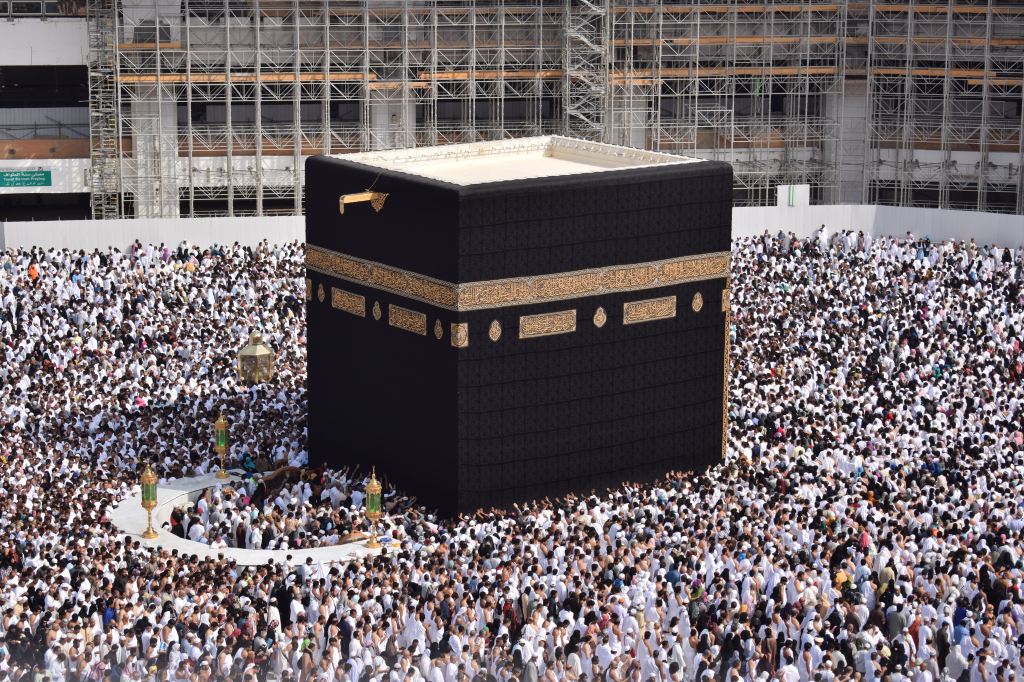
Just looking at the statistics today, there are about 2 BILLION Muslims in the world. Billions with a capital “B”! And fun fact, “Muhammad” actually means “the one who is praised” and at any given moment, countless Muslims are sending prayers to the man they call their role model and final Prophet of God. Thus, as the first Surah above mentions, did God not elevate for Prophet Muhammad his reputation?