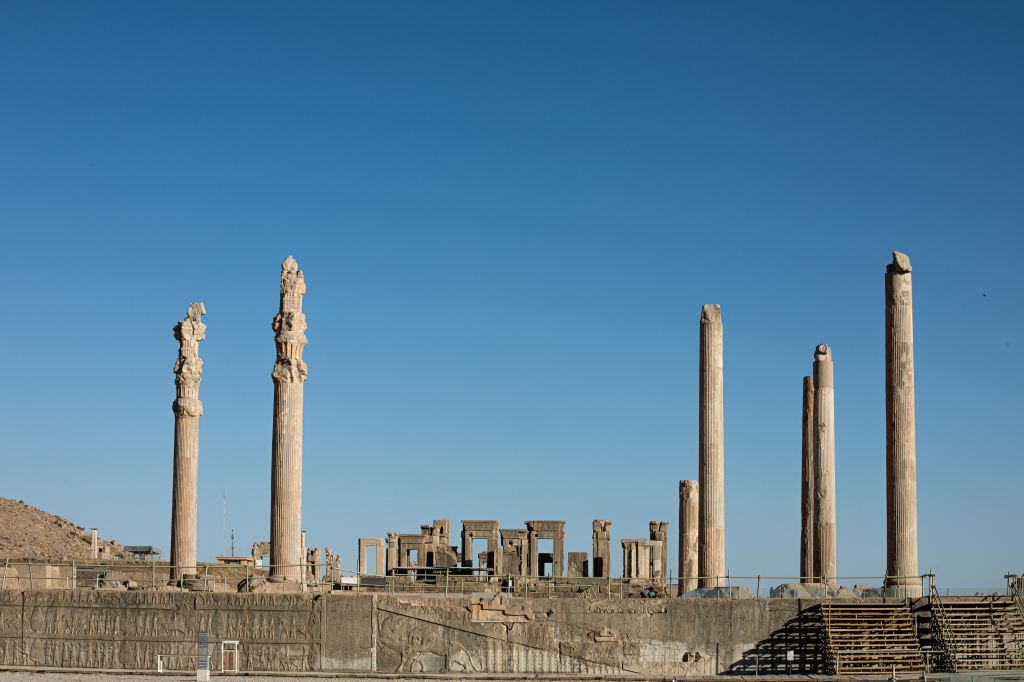
For centuries, the Roman and Persian Empires have been THE greatest superpowers of the world. The Roman Empire started around 27 BC and at its peak, had territories from the Western borders of Europe to present day Iraq. The Persian Empire started around 550 BC and at its peak, had parts of Greece in the West to parts of present day Pakistan. During their rules, no other empire stood close.
The Arabian peninsula was between these two great empires. During the late 500s- early 600 AD, when Prophet Muhammad (ﷺ) was around, besides some areas of Northern Arabia, the Arabs were largely unconquered by the two. Why you may ask? Well, frankly they didn’t care to. It was just a desert land with “backwards” people living there. Oil wasn’t discovered then, so even less reason to invade. It was just not worth it. Besides, the two empires were busy fighting each other.
However, in about a decade after Prophet Muhammad passed away, his followers and the newer Muslim generation conquered much of the eastern half of the Roman Empire (Byzantine Empire) and the entirety of the Persian Empire. Centuries of rule broken apart within a few years. How? Of course, there will always be multiple theories for such an ending, but to this day, historians don’t have a perfect explanation.
How did a “backwards” people who were never united before Prophet Muhammad, with less numbers, less education, less training, and less equipment, manage to break apart two superpowers simultaneously?
It wasn’t just a historical miracle, but also a prophecy! It has been reported by multiple sources that when Prophet Muhammad and his followers were in a battle (Battle of the Trench) where the situation looked very bleak for the Muslims, they were digging a trench as part of a tactic against the enemies. They found a massive rock too big to break up. So, they sought the help of the Prophet (ﷺ). He struck the rock with a spade three times, and each time he would strike it, a bright light would spark. The first time he struck the rock, he uttered, “Allahu Akbar (i.e. Allah is The Greatest)! The keys of ancient Syria are granted to me, I swear by Allah, I can see its palaces at the moment”; on the second strike he said, “Allahu Akbar, Persia is granted to me, I swear by Allah, I can now see the white palace of Madain”; on the third strike he said, “Allahu Akbar, I have been given the keys of Yemen, I swear by Allah, I can see the gates of Sana’ while I am in my place.” [Source: Ahmad]
How did Prophet Muhammad make such a prediction during a battle that everyone thought the Muslims would lose? At a point they did not even conquer all of Arabia yet?
“You have to remember that the two great superpowers were the Byzantine empire [Eastern Roman empire] and Sassanid Persia…they were the dominant powers. If you’re putting it in a modern parlance, it’s a bit like the Eskimos taking on the United States of America and Russia.”
Barnaby Rogerson, British author, television presenter, and publisher
 Why I "Chose" Islam