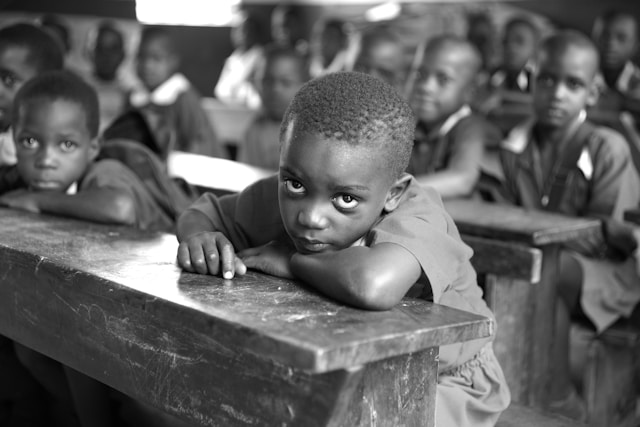
According to World Bank Group, in 2025, an estimated 831 million people were living in extreme poverty, while trying to survive on less than $3 per day.
According to the UN, in 2024, 8.2% of the global population faced hunger and about 28% – nearly 2.3 billion people – were moderately or severely food insecure. Also, 2.2 billion people lacked safely managed drinking water.
We see them as just statistics, but what if you were the one in 11 people to go to bed hungry each night? How would you feel knowing that ironically there is more than enough food produced to feed everyone on the planet? We can make the excuses. We can say it’s complicated or regarding the billionaires say “It’s their money. They can do what they want with it.” However we know this day and age, saying it’s complicated is just an excuse. We flew to the moon! We sent robots to other planets. We can definitely solve world hunger.
Regarding the ultra-rich, lets’s look at some math. If you are a billionaire and were to spent $1 million every single week, it will take you 20 years to finish! Yet when it comes to giving a small percentage in taxes to benefit society, something they won’t even notice is missing from their bank, they adamantly will fight it! If that is not a disease, I don’t know what it. Besides, we know that more likely than not, these rich folks got their wealth by exploiting the poor, whether directly or indirectly across the globe.
In Islam, every Muslim who is not in poverty and has a certain amount of money saved up (cash and assets) has to give to charity every year! This mandatory, annual charity is called Zakat and it is about 2.5% of your saved assets.
As Allah said in the Qur’an,
Indeed, [prescribed] charitable offerings are only [to be given] to the poor and the indigent, and to those who work on [administering] it, and to those whose hearts are to be reconciled, and to [free] those in bondage, and to the debt-ridden, and for the cause of God, and to the wayfarer. [This is] an obligation from God. And God is All-Knowing, All-Wise.
[Qur’an 9:60]
The beauty of this is everyone has to give it! It doesn’t matter if you’re a billionaire, millionaire, or make 6-figures – as long as you are not in poverty, you have to give it! No one can whine about it being unfair because it’s the same percent for everyone! In first world countries like the United States, we think taxing the rich a high percent will fix everything (even though with the legalities, they end up paying less than the lower-classes). But just imagine for a moment what the world will be like if everyone gave their 2.5%. Not a single person will be left sleeping hungry. Wouldn’t that be something?
 Why I "Chose" Islam