Who’s Abu Lahab? He is actually a paternal uncle of Prophet Muhammad (ﷺ), and despite the closeness, he was actually one of the most vile enemies of the Muslims.
In fact, during Hajj season, it is said that when the Prophet would go to people to tell them about Islam, Abu Lahab made sure to tell them not to listen to him, calling him a liar and a madman.
Abu Lahab was made an example in the Qur’an and that’s what makes this important. The Qur’an has an entire Surah – Surah Al-Masad – dedicated to him. It was revealed during his lifetime, and in it, it says,
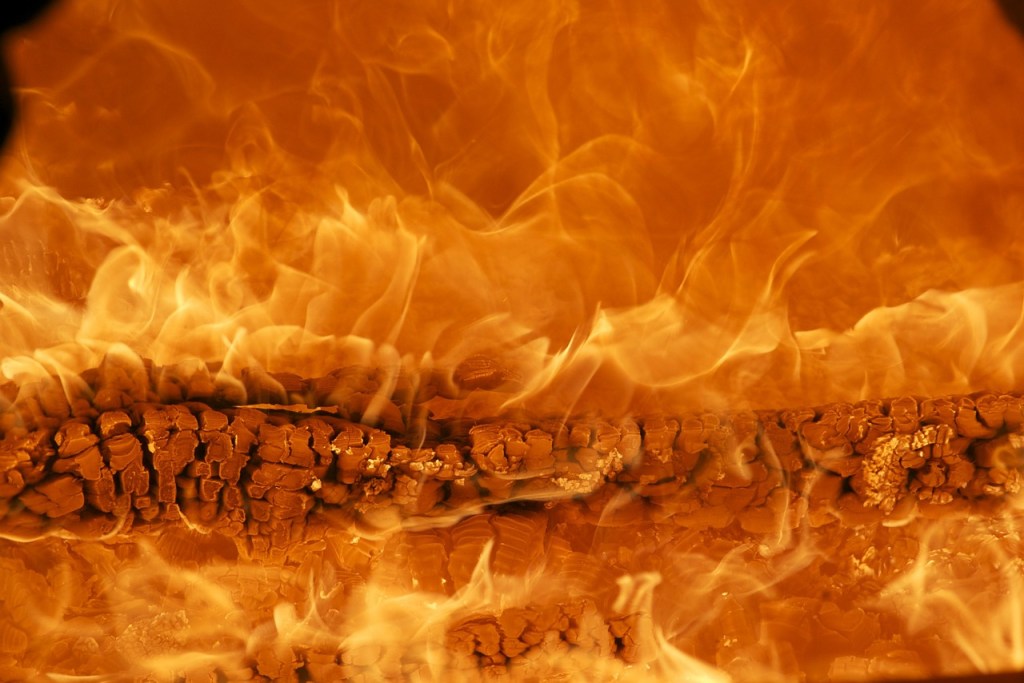
“He will burn in a flaming Fire”
[Qur’an 111:3]
So what does that mean? That he will basically die a non-Muslim.
Why is this something Muslims call a miracle? Well, for one, to prove the Qur’an wrong, all Abu Lahab would’ve had to do was say, “I’m Muslim” and that’s it! It would’ve been the easiest way to prove the Qur’an wrong because in general, Muslims cannot question the intentions of another person. If he said he’s Muslim, that’s between him and Allah, and we cannot question his sincerity, unless his speech and actions are too obvious to ignore. Thus, Abu Lahab could’ve simply lied and had the last laugh. Yet, he didn’t.
As well, many of Prophet Muhammad’s enemies eventually accepted Islam. In fact, Abu Lahab’s daughter, Durrah, and his brothers Hamza and Al-Abbas, all accepted Islam. So too did people like Abu Sufyan, who became, after the death of earlier prominent Qurashis, THE leader of Makkah. It was not uncommon at all to hear news like that. However, Abu Lahab didn’t.
All this begs the question – if a human being wrote the Qur’an, how was he able to predict these things accurately? How was it “assumed” that an uncle of the Prophet, someone who knew his nephew and his noble characteristics up close, despite having years to rethink and statistics in favor of him becoming Muslim, did not accept the religion till his last breath?
 Why I "Chose" Islam