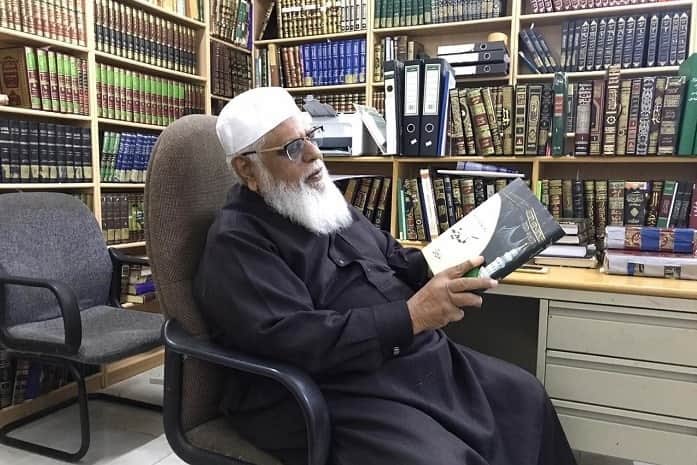
His full name is Muhammad Diya Al-Rahman Al-Azami and he was a man with a truly incredible and unique story. He was born around 1943 to a Brahman Hindu family in India. He got curious about Islam, learned about it, and ended up converting at a young age.
He kept learning about the religion until he ended up going to Saudi Arabia, a hub for Islamic knowledge! There he studied at Islamic University of Madinah and Umm al-Qura University. He then became the Dean of the College of Hadith at the University of Madinah, which was perhaps the most famous Islamic university in the world! From where to where!
To make matters more interesting, he retired early about the year 2000 to compile all of the authentic Hadiths (documented sayings and actions of Prophet Muhammad (ﷺ)) into one work. For those who know Sahih Al-Bukhari, Dr. Al-Azami wanted to apply the same standards of Imam Al-Bukhari to the hundreds of thousands of Hadiths available in the world. In 2019, he ended up completing it! It is called “al-Jāmi al-Kāmil fī al-Ḥadīth al-Ṣaḥīh al-Shāmil” (The Comprehensive Complete Compendium of Sahih Hadith) and it has over 15,000 hadiths! A year later, he passed away.
As Dr. Yasir Qadhi, an American Muslim scholar, explained all this in his Facebook page, “It was as if Allah wanted him – a child born to a Brahman family – to rise up to a task that no one had ever done, and gave him life until he finished this monumental project.”
And what makes all this more amazing is that Dr. Al-Azami passed away on THE HOLIEST DAY of the Islamic year and that is the Day of Arafah.
After reading all this, can we look at his life and just say, “Sure, it’s amazing” without pondering upon it? We should ask ourselves – what are the chances all of this happened to one person? Every single fact we went through – from a kid converting to becoming the dean of a famous university to compiling all those Hadiths to passing away on the holiest day out of all days – how does all that just happen, unless Something willed them to happen?