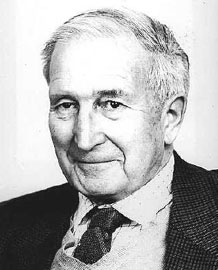
Antony Flew (1923-2010) is a British philosopher of religion who taught in prestigious universities such as Oxford, Aberdeen, and NYU in Toronto. Any philosopher, or academic atheist or agnostic, knows of him, mainly for being the person who went from being a strong advocate of atheism to believing in God.
The change shook the core of a lot of people! Many atheists and agnostics felt betrayed and perhaps thought he was a madman or someone not thinking right anymore. However, as told by BBC’s William Crawley, Flew “explained that he, like Socrates, had simply followed the evidence, and the new evidence from science and natural theology made it possible to rationally advance belief in an intelligent being who ordered the universe.” His lifelong commitment was to go where the evidence leads, and as a result, the evidence eventually led him to theism.
In a 2007 interview with Benjamin Wiker, Flew explained:
“There were two factors in particular that were decisive. One was my growing empathy with the insight of Einstein and other noted scientists that there had to be an Intelligence behind the integrated complexity of the physical Universe.
The second was my own insight that the integrated complexity of life itself – which is far more complex than the physical Universe – can only be explained in terms of an Intelligent Source. I believe that the origin of life and reproduction simply cannot be explained from a biological standpoint despite numerous efforts to do so.”
Now, I’m not saying he became Muslim… at least not publicly. He moved to a general stance on theism, but his life and the 180° change does teach us a lot. Why would a prominent academic, after decades of being an atheist, change his position towards the end of his life? Are we going to just dismiss it emotionally and irrationally, or will we actually ponder upon his reasons?

 Why I "Chose" Islam