
When we think of the word “pharaoh“, we think of the rulers of Ancient Egypt. We think of their claim to being gods, being mummified, and then being buried in the pyramids.
However, many of us may not know that historically the term “pharaoh” was not always used for the Ancient Egyptian civilization. It was actually used for the rulers starting at the New Kingdom (see timeline below from Ancient History Encyclopedia). Before that, the word simply meant “royal palace” and NOT the title for the ruler.
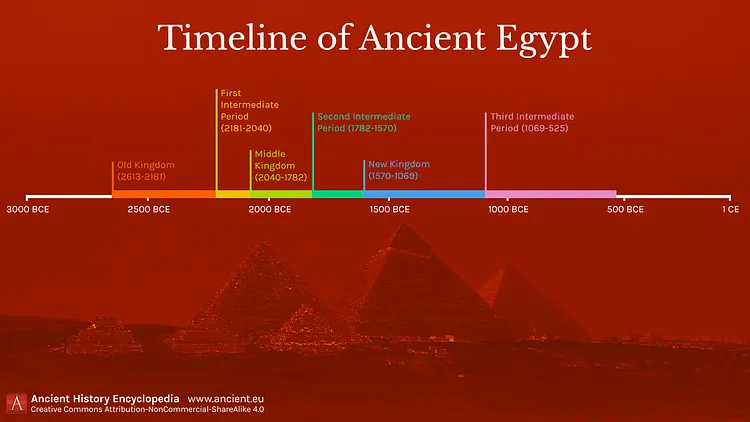
According to history, Prophet Joseph (عَلَيْهِ ٱلسَّلَامُ) is said to have lived before the New Kingdom, likely during the Middle Kingdom or Second Intermediate, when the Hyksos ruled Egypt. Prophet Moses (عَلَيْهِ ٱلسَّلَامُ), on the other hand, is said to have lived during the New Kingdom.
So where are we going with this? Well, in the Bible, it says:
“Then Pharaoh sent and called Joseph, and they quickly brought him out of the pit. And when he had shaved himself and changed his clothes, he came in before Pharaoh.” [Genesis 41:14, English Standard Version]
In the story of Moses, it says:
“When Pharaoh heard of it, he sought to kill Moses. But Moses fled from Pharaoh and stayed in the land of Midian. And he sat down by a well.” [Exodus 2:15 ESV]
So essentially, it mentions “pharaoh” for both time periods, even though historically, rulers were not called “pharaohs” during the time of Joseph.
However, in the Qur’an, there is a clear distinction. In the story of Joseph, it says:
“And [subsequently] the King said, ‘Indeed, I have seen [in a dream] seven fat cows being eaten by seven [that were] lean, and seven green spikes [of grain] and others [that were] dry. O eminent ones, explain to me my vision, if you should interpret visions.'” [Qur’an 12:43]
In the story of Moses, it says:
“And Moses said, ‘“‘O Pharaoh, I am a messenger from the Lord of the worlds,” [Qur’an 7:104]
Thus, in the Qur’an, there is an accurate use of the two words “King” and “Pharaoh”. That then leads to the next question – where did the Qur’an get this from? The claim that it stole from the bible is clearly disproven here. As well, during Prophet Muhammad’s (ﷺ) time, there was no access to these historical information in the lands of Arabia, aside from the bibles and torahs present. And if he was to copy from the bible, why didn’t he copy the inaccuracies as well?

 Why I "Chose" Islam